

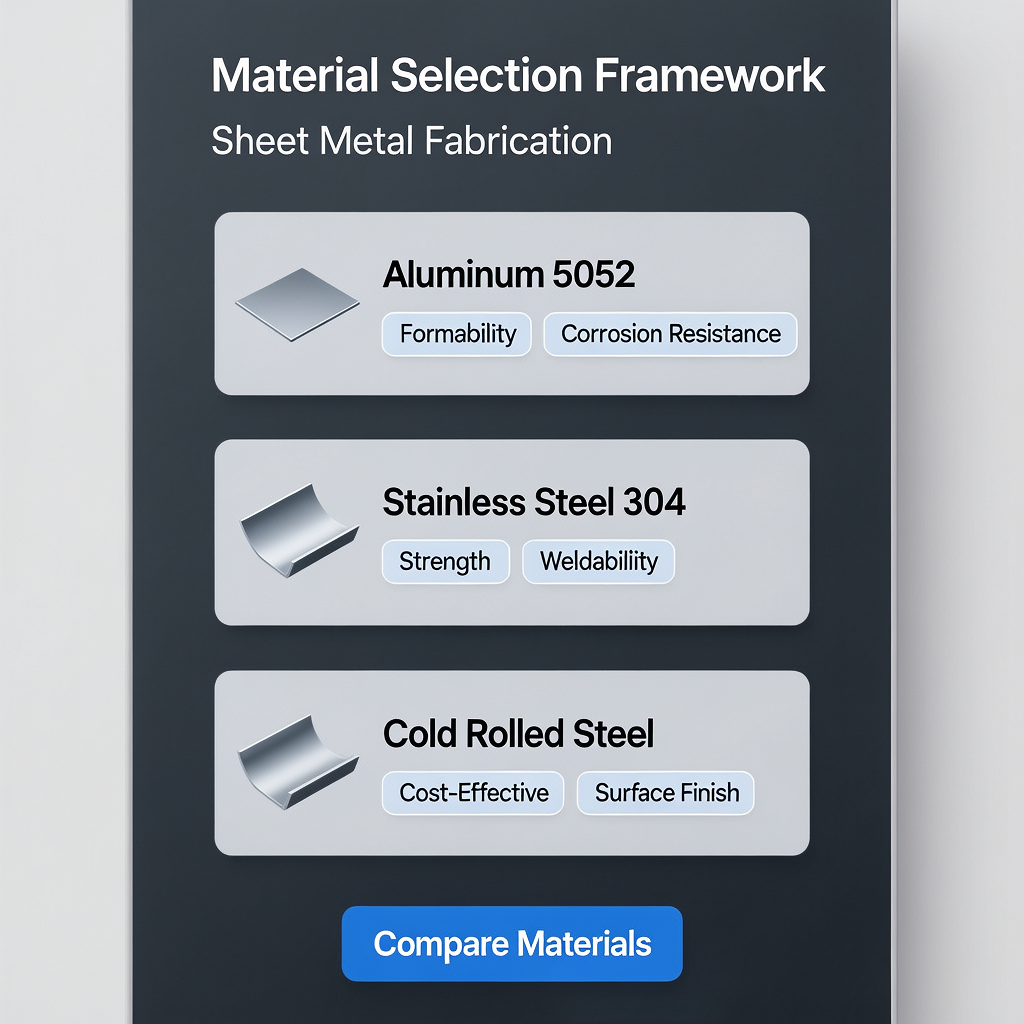
Selecting appropriate sheet metal materials represents one of fabrication’s most consequential decisions. Wrong choices cascade through production causing quality problems, cost overruns and customer dissatisfaction. Right selections enable efficient manufacturing while meeting performance requirements beautifully.
Experienced engineers approach material selection systematically rather than relying on hunches or habit. A structured framework considers all relevant factors methodically. This comprehensive guide presents that framework in practical detail.
Understanding Core Selection Criteria
Multiple competing factors influence material decisions simultaneously. Rarely does one metal emerge as obviously superior across all dimensions. Trade-offs become inevitable. Smart selection balances priorities appropriately for specific applications.
Mechanical Performance Establishes Boundaries
Structural applications demand adequate strength fundamentally. Yield strength indicates where permanent deformation begins under load. Tensile strength shows ultimate failure point. Safety factors provide cushion between operating stresses and material limits.
Ductility measures how much deformation metal tolerates before fracturing. Brittle materials fail suddenly without warning. Ductile materials exhibit visible yielding before catastrophic failure. Most applications favor ductility for safety reasons.
Hardness affects wear resistance and dent resistance directly. Harder materials maintain surface integrity under abrasion. However extreme hardness often accompanies brittleness. Balanced properties suit most fabrication work better.
Fatigue strength matters enormously for components experiencing cyclic loading. Materials showing excellent static strength sometimes fail prematurely under repeated stress cycles. Applications involving vibration or fluctuating loads require careful fatigue analysis.
Formability Determines Manufacturing Feasibility
Complex shapes require significant bending, stretching and drawing during fabrication. Materials must possess sufficient ductility for intended forming operations. Attempting severe forming with brittle materials guarantees cracking and scrap.
Bend radius capabilities vary dramatically across metals. Soft aluminum alloys tolerate extremely tight radii. High-strength steels crack unless radii remain generous relative toward thickness. Engineers must match material formability against geometric requirements.
Springback characteristics affect achievable accuracy fundamentally. Materials exhibiting severe springback complicate tooling design and raise production costs. Low-springback alternatives simplify manufacturing when geometry permits substitution.
Deep drawing capabilities determine feasibility for cup-shaped or cylindrical components. Drawing ratio limits depend on material properties intrinsically. Exceeding capabilities causes tearing or wrinkling. Multiple progressive draws sometimes become necessary with challenging materials.
Environmental Resistance Protects Long-Term Function
Corrosion destroys metal components insidiously over time. Atmospheric exposure, chemical contact and galvanic coupling all accelerate degradation. Protective strategies include inherently corrosion-resistant materials, coatings or environmental isolation.
Stainless steels offer excellent corrosion resistance through chromium oxide surface layers. However numerous stainless grades exist with vastly different characteristics. Specifying appropriate grades for anticipated environments proves essential.
Aluminum naturally forms protective oxide layers preventing deeper corrosion. Marine and industrial atmospheres still attack aluminum eventually though. Anodizing treatments enhance corrosion protection substantially.
Mild steel corrodes readily without protection. Paint systems, galvanizing or other coatings become mandatory for most applications. Maintenance requirements over product lifetimes affect total ownership costs significantly.
Temperature extremes challenge material stability. High temperatures cause creep, oxidation and strength degradation. Cryogenic conditions embrittle some materials dangerously. Operating temperature ranges must inform material decisions clearly.
Weight Considerations Drive Transportation Applications
Aerospace and automotive industries obsess over weight reduction constantly. Lighter vehicles consume less fuel and emit fewer pollutants. Every kilogram eliminated improves performance and efficiency.
Aluminum offers roughly one-third density compared with steel. Strength-to-weight ratios often favor aluminum despite lower absolute strength. Thicker aluminum sections can match steel strength while weighing substantially less.
Magnesium provides even lower density than aluminum. However magnesium remains expensive and presents fire hazards during machining. Niche applications justify these complications occasionally.
Advanced high-strength steels deliver impressive strength allowing thinner gauges. Weight savings become possible while retaining steel’s economic advantages. Modern automotive structures increasingly employ these materials strategically.
Economic Realities Constrain Options
Material costs vary enormously from commodity steels through exotic alloys. Budget constraints eliminate certain options immediately. However cheapest materials rarely optimize total costs when processing difficulties and performance limitations enter calculations.
Raw material pricing fluctuates with market conditions. Supply chain disruptions or geopolitical events cause dramatic swings. Sole-source dependency creates vulnerability. Designs allowing multiple material options provide flexibility.
Processing costs depend heavily on material characteristics. Difficult-to-form materials increase scrap rates and cycle times. Abrasive materials accelerate tooling wear. Seemingly cheap materials sometimes prove expensive overall.
Secondary operations like welding, coating or heat treating add expense. Materials minimizing finishing requirements improve economics. Stainless steel eliminating painting costs might justify higher material prices.
Availability affects lead times and reliability. Exotic alloys often require extended delivery schedules. Standard materials ship quickly from multiple suppliers. Commonality reduces procurement headaches.
Systematic Selection Process
Effective material selection follows logical steps rather than jumping toward premature conclusions. This structured approach ensures thorough evaluation.
Define Requirements Comprehensively
Begin by documenting all performance requirements explicitly. What loads must components withstand? Which environmental exposures will occur? Are weight restrictions critical? Does appearance matter?
Distinguish absolute requirements from preferences clearly. Strength below certain thresholds causes failure definitively. Modest weight increases might prove acceptable. Understanding flexibility helps optimization.
Consider entire product lifecycles. Manufacturing requirements matter but so do assembly, operation, maintenance and eventual disposal. Holistic thinking prevents shortsighted decisions.
Regulatory compliance adds non-negotiable constraints. Food-contact applications restrict material options. Medical devices face stringent biocompatibility requirements. Understanding applicable standards proves essential early.
Identify Candidate Materials
Generate broad lists of potentially suitable metals initially. Avoid prematurely narrowing options. Unconventional choices sometimes offer unexpected advantages.
Reference materials databases and handbooks systematically. Online tools from suppliers provide searchable specifications. Professional organizations publish extensive property data.
Consult colleagues and vendors for suggestions. Experienced practitioners know which materials perform well for similar applications. Supplier technical representatives offer valuable insights.
Consider both traditional choices and newer alternatives. Advanced materials sometimes deliver superior performance. However proven materials carry less risk for critical applications.
Comparing Common Sheet Metal Materials
Understanding characteristics of frequently used metals helps inform selection decisions practically.
Low-Carbon Steel Dominates General Fabrication
Mild steel remains fabrication’s workhorse material for excellent reasons. Moderate cost combines with good formability and weldability. Adequate strength suits most structural applications.
Cold-rolled steel provides smooth surfaces and tighter thickness tolerances. Hot-rolled steel costs less but shows rougher finishes. Applications determine which variant makes sense.
Rust prevention requires attention. Painting, galvanizing or powder coating protect against atmospheric corrosion. Maintenance programs ensure long-term durability.
Stainless Steels Offer Corrosion Resistance
Austenitic grades like 304 and 316 provide excellent corrosion resistance. These alloys contain chromium and nickel generating protective surface oxides. Food processing, chemical handling and marine environments favor stainless materials.
Formability varies across stainless families. Austenitic grades bend well but work-harden rapidly. Ferritic grades show limited ductility. Martensitic grades achieve high strength through heat treatment.
Cost premiums over mild steel run substantial. However eliminating coating requirements and extending service life often justify initial expense. Life-cycle analysis reveals true economics.
Hi, this is a comment.
To get started with moderating, editing, and deleting comments, please visit the Comments screen in the dashboard.
Commenter avatars come from Gravatar.